Key Takeaways:
- MACD is a trend-following momentum tool that helps time entries and exits and spot possible reversals across day, swing, and spot trading by comparing two EMAs and their signal relationship.
- It comprises the MACD line (fast EMA minus slow EMA), a 9-period signal EMA, and a histogram showing their difference to visualize momentum shifts.
- Default calculation uses 12- and 26-period EMAs for the MACD line, a 9-period EMA as the signal line, and the histogram = MACD − Signal, clarifying speed versus smoothing.
- Bullish/bearish crossovers and positive/negative divergence flag potential momentum turns, while histogram expansion or contraction gauges the strength of the move.
- Sustained readings above/below the zero line and successive bullish/bearish crossovers help confirm trend direction, with rising bars signaling acceleration and falling bars signaling fade.
- Combine MACD with moving-average crosses, RSI extremes, volume confirmation, Fibonacci levels, and trendlines to add confluence and filter false signals on TMGM’s charts.
- Pick appropriate timeframes, avoid choppy ranges, use stop-loss and take-profit, test on a demo first, and document rules to apply MACD consistently on TMGM’s platform.
What is MACD Indicator?
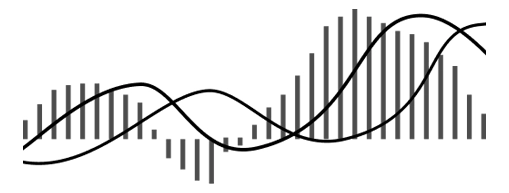
MACD is a momentum indicator that shows the relationship between two exponential moving averages (EMAs) of a security’s price.
The MACD Consists of Three Key Components:
MACD Line: The difference between the short-term and long-term EMAs, signaling trend changes.
Signal Line: A 9-day EMA of the MACD line, which generates buy or sell signals.
Histogram/Price Chart: A visual representation of the difference between the MACD and signal lines, indicating momentum strength.
How is MACD Calculated?
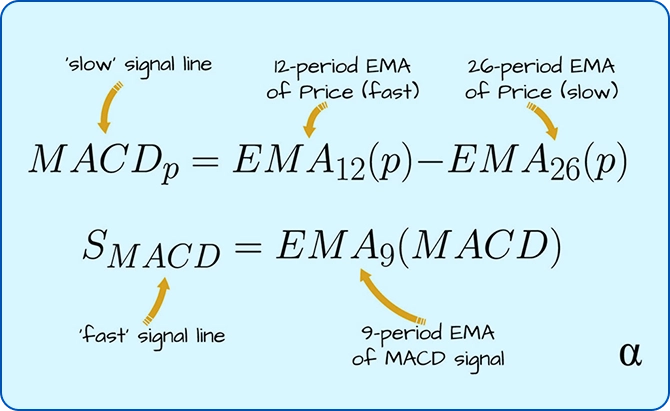
Short-Term EMA: A fast-reacting line based on recent price movements.
Long-Term EMA: A slower line that smooths out short-term fluctuations.
MACD Line: Short-term EMA minus long-term EMA.
Signal Line: 9-day EMA of the MACD line
Histogram: Difference between the MACD and signal lines
Interpreting MACD Signals
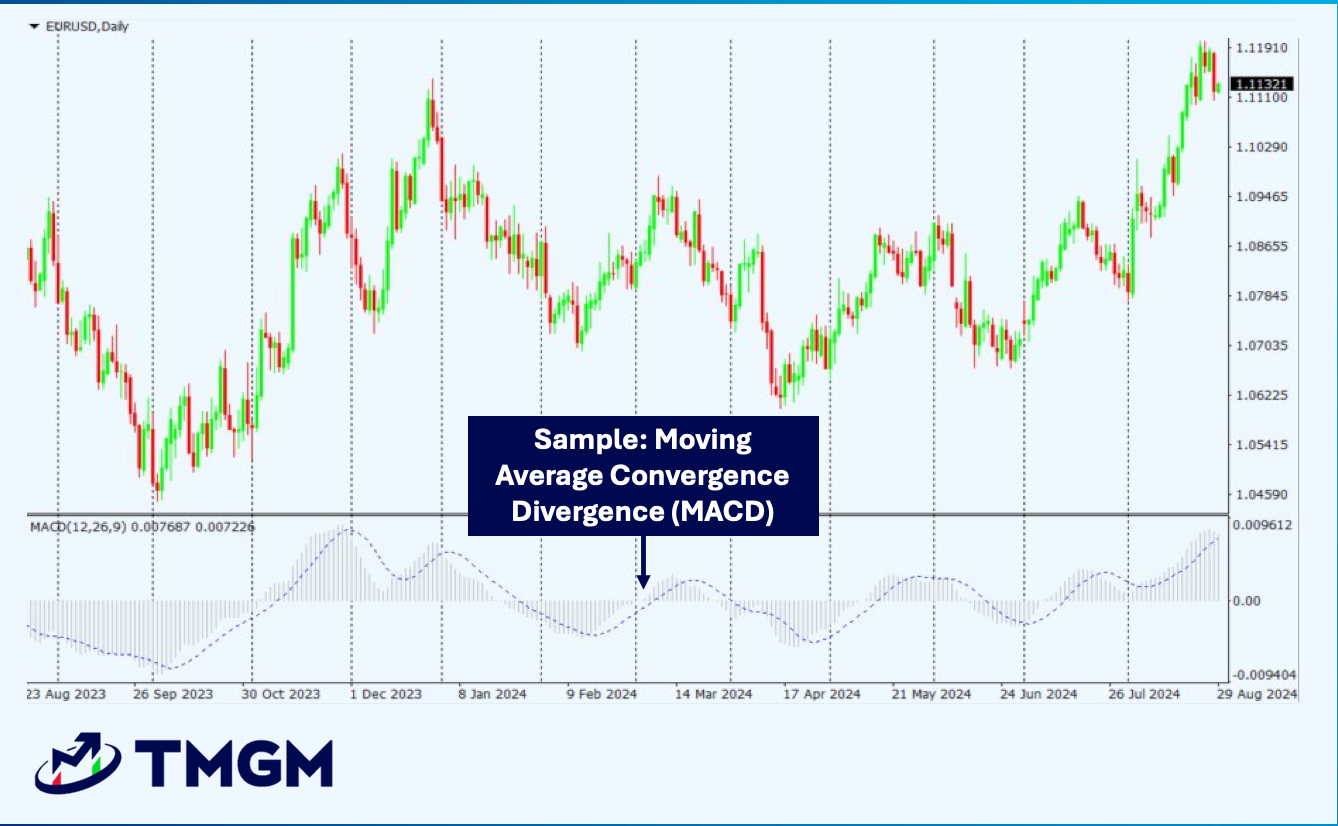
1. MACD Crossovers:
Bullish Crossover: The MACD line crosses above the signal line — may suggest upward momentum.
Bearish Crossover: The MACD line crosses below the signal line — may indicate downward momentum.
2. MACD Divergence:
Positive Divergence: Price forms lower lows while the MACD forms higher lows — could signal a bullish reversal.
Negative Divergence: Price forms higher highs while the MACD forms lower highs — could indicate a bearish reversal.
Using MACD for Trend Identification
The MACD is invaluable for identifying trends and pinpointing entry and exit opportunities:
Bullish Crossovers: Can indicate the start of a short-term bullish trend.
Bearish Crossovers: May signal trend reversals to the downside.
Histogram Analysis: Rising bars suggest strengthening momentum; falling bars suggest weakening momentum.
Combining MACD with Other Indicators
Combining MACD with Moving Averages
Overlay moving averages to validate MACD signals:
Golden Cross: Short-term MA crossing above long-term MA — bullish sign.
Death Cross: Short-term MA crossing below long-term MA — bearish sign.
Using MACD and RSI (Relative Strength Index)
Use RSI (Relative Strength Indicator) to identify overbought or oversold zones:
Overbought RSI + bearish MACD crossover = potential downtrend.
Oversold RSI + bullish MACD crossover = potential uptrend.
Volume Analysis
Analyze trading volume alongside MACD signals using TMGM’s best trading platform and trading tools:
Rising volume with bullish MACD = stronger uptrend.
Falling volume with bearish MACD = confirms weakening price action.
Fibonacci Retracement
Fibonacci retracement levels can act as dynamic support and resistance areas. When paired with MACD:
A bullish MACD crossover near a key Fibonacci support level can signal a strong long setup.
A bearish MACD signal near a retracement resistance level strongly suggests a sell opportunity.
Trendline Trading Strategy
Drawing trend lines helps traders visualize potential support or resistance. When used with MACD:
A MACD crossover that aligns with a trendline trading signal or opportunity increases confidence in a trade entry.
Trendline breaks combined with MACD divergence can suggest early signs of trend reversal.
Popular MACD Strategies
Choose the Right Timeframe: TMGM’s flexible charting options allow you to select timeframes that align with your trading strategy, whether short-term or long-term.
Combine Indicators: To confirm MACD signals, use TMGM’s extensive technical tools, such as Bollinger Bands or Fibonacci retracements.
Avoid Sideways Markets: TMGM’s real-time market data helps identify clear trends, avoiding unreliable MACD signals in choppy markets.
Implement Risk Management: Use TMGM’s stop-loss and take-profit features to protect your capital and secure gains.
Practice with a Demo Account: You can test MACD strategies risk-free on TMGM’s demo account before applying them to live markets.
MACD Trading Strategies Example:
A trader sees a bullish MACD crossover confirmed by rising volume and an oversold RSI. They may choose to enter a long position with a stop-loss placed below recent support.
Key Takeaways:
MACD is a momentum indicator that reveals the relationship between two EMAs.
Traders use the MACD indicator to identify trends, reversals, and entry/exit signals.
MACD divergence can warn of potential trend reversals.
Key strategies include the MACD crossover, histogram analysis, and zero-line cross.
Combining MACD with RSI, Fibonacci Retracement, Moving Averages, and Volume Analysis adds confirmation and reduces false signals.
Use risk management and avoid trading MACD in sideways or choppy markets.
Want to Practice MACD Strategies Risk-Free?
Test your MACD strategy with a demo account before entering live trades. Practice combining MACD with other indicators and timeframes to build confidence.
Why Trade with TMGM?
TMGM offers a suite of tools and resources to maximize the effectiveness of your trading strategies:
Advanced Charting Tools: Customize your MACD analysis with detailed charts and overlays.
Diverse Asset Selection: Trade forex, indices, commodities, and more, including popular cryptocurrencies.
Fast Execution: Experience lightning-fast trade execution for optimal entry and exit.
Educational Resources: Access webinars, tutorials, and guides to improve your trading skills.